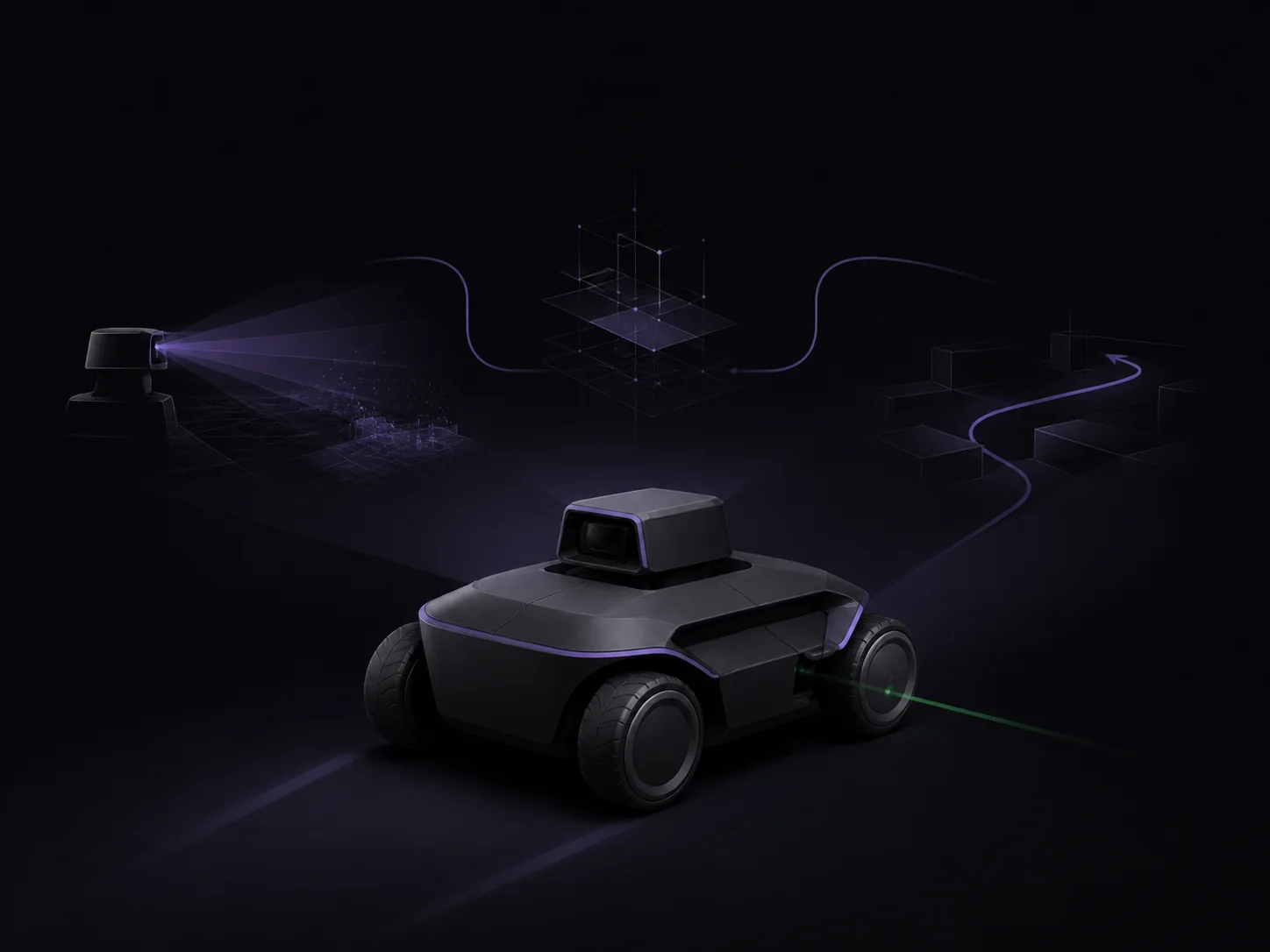
An active robotics-platform redesign following a functioning Phase I prototype built to explore software orchestration and embedded control.
Phase I validated the direction; the current ground-up redesign focuses on cleaner hardware and software boundaries.
01 / Problem
The project asks how AI behavior changes when it must operate through real hardware instead of remaining entirely on a screen.
02 / What I built
Built and validated a functioning phase-one robotics prototype in TypeScript, Effect, and C, then retired that implementation after identifying integration constraints. The active ground-up redesign runs on Raspberry Pi OS and remains terminal-first while the system boundaries are rebuilt.
AI-generated concept study · not final hardware
System boundary
How the pieces connect.
The current boundary keeps the host and interaction layer simple so experimentation can concentrate on software coordination and hardware behavior.
01Terminal input
02TypeScript and Effect
03Application state
04C hardware boundary
05Robot behavior
Engineering decision
The right systems boundary is the one that leaves enough time to test the actual idea.
Tradeoff
Using Raspberry Pi OS gives up control over the full operating-system stack, but avoids the maintenance cost that caused NovionOS to be sunset.
What happens next
Continue the ground-up redesign around maintainability and hardware/software cohesion before presenting a fixed product architecture.
Implemented proof
What can be evaluated today.
Scout produced a functioning Phase I prototype and now continues as an active redesign; its next hardware and interaction model remain in development.
01
Built and validated a functioning Phase I robotics prototype.
02
Retired the initial implementation when integration constraints exposed the need for cleaner boundaries.
03
Uses Raspberry Pi OS, a terminal-only interface, TypeScript, Effect, and C for the active redesign.