A room-run prototype needs combat, loot pressure, extraction, and raid consequences to remain coherent while the feature set grows.
02 / What I built
Built a C++/raylib prototype with a three-room run, weapons, grenades, four enemy types, pickups, early or final extraction, an in-session stash, and pre-raid purchases.
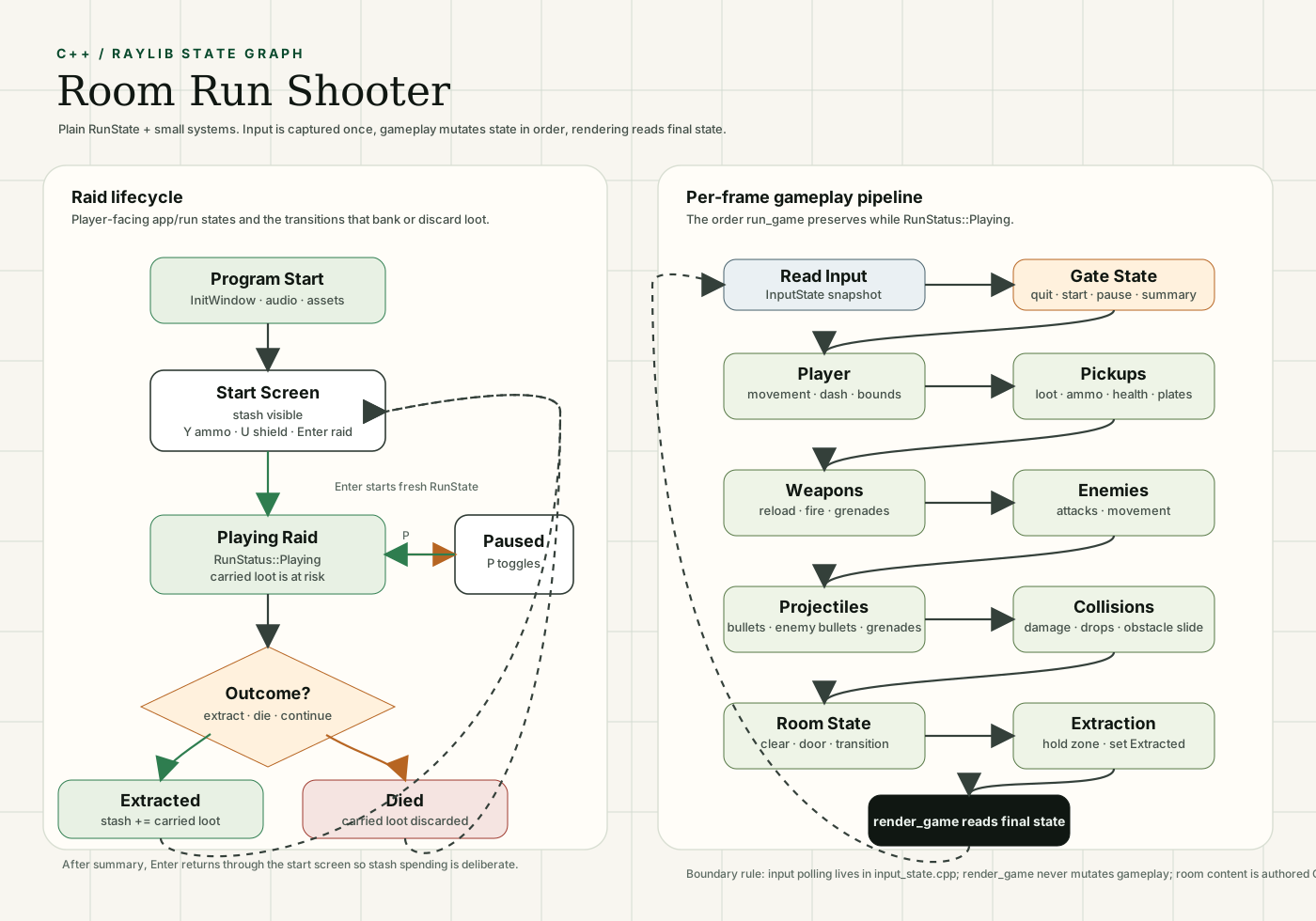
Project state map · raid lifecycle and frame pipeline
System boundary
How the pieces connect.
One frame snapshots input, advances small systems over aggregate run state, resolves collisions and room decisions, then renders from the settled state.
01Input snapshot
02Player and combat
03Enemies and projectiles
04Collision resolution
05Room / extraction state
06Render
Engineering decision
Prototype architecture should make the experiment easy to read before making it easy to extend.
Tradeoff
Plain state and small systems keep the prototype direct and testable, while deliberately deferring extensibility, external room data, and editor tooling.
What happens next
External playtesting and tuning remain the next documented phase; no public playtest outcome is claimed yet.
Implemented proof
What can be evaluated today.
All documented prototype feature phases are implemented, while graphics and content remain intentionally minimal.
01
Implements a three-room run with optional room-two extraction and final-room extraction.
02
Includes pistol and shotgun state, dash, grenades, four enemy types, and multiple pickup types.
03
Separates per-raid state from an in-session player profile and stash.
Source proof
A decision visible in code.
Room Run Shooter / C++Engine/Core/src/run_game.cpp